Thai or Oil Massage — Which to Learn First?
Thai massage versus aromatherapy oil massage training compared — technique, difficulty, earning potential and which one to take first for your goals.
Short answer
If your goal is practitioner registration and a long-term career, start with Thai massage 150 hours — it is the foundation of every other technique and teaches you to read the body. If your goal is higher income in hotel spas, add aromatherapy oil massage 150 hours, since shops charge 1.5–2× more for oil treatments and tips are better. Therapists who can do both are never short of bookings.
After income, the question we hear most often is: should I learn Thai massage or oil massage first?
The answer depends on where you want to work.
How they differ
| Thai massage | Oil massage | |
|---|---|---|
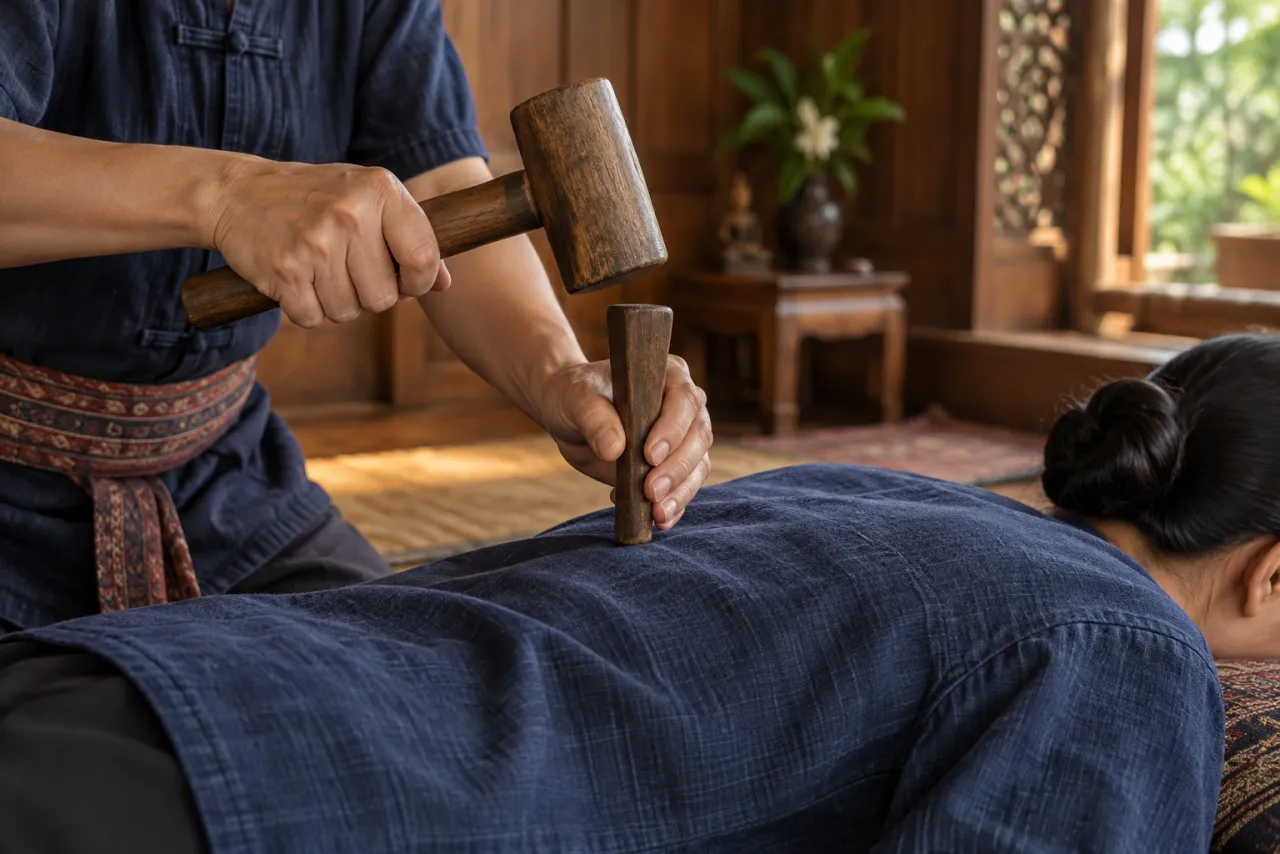
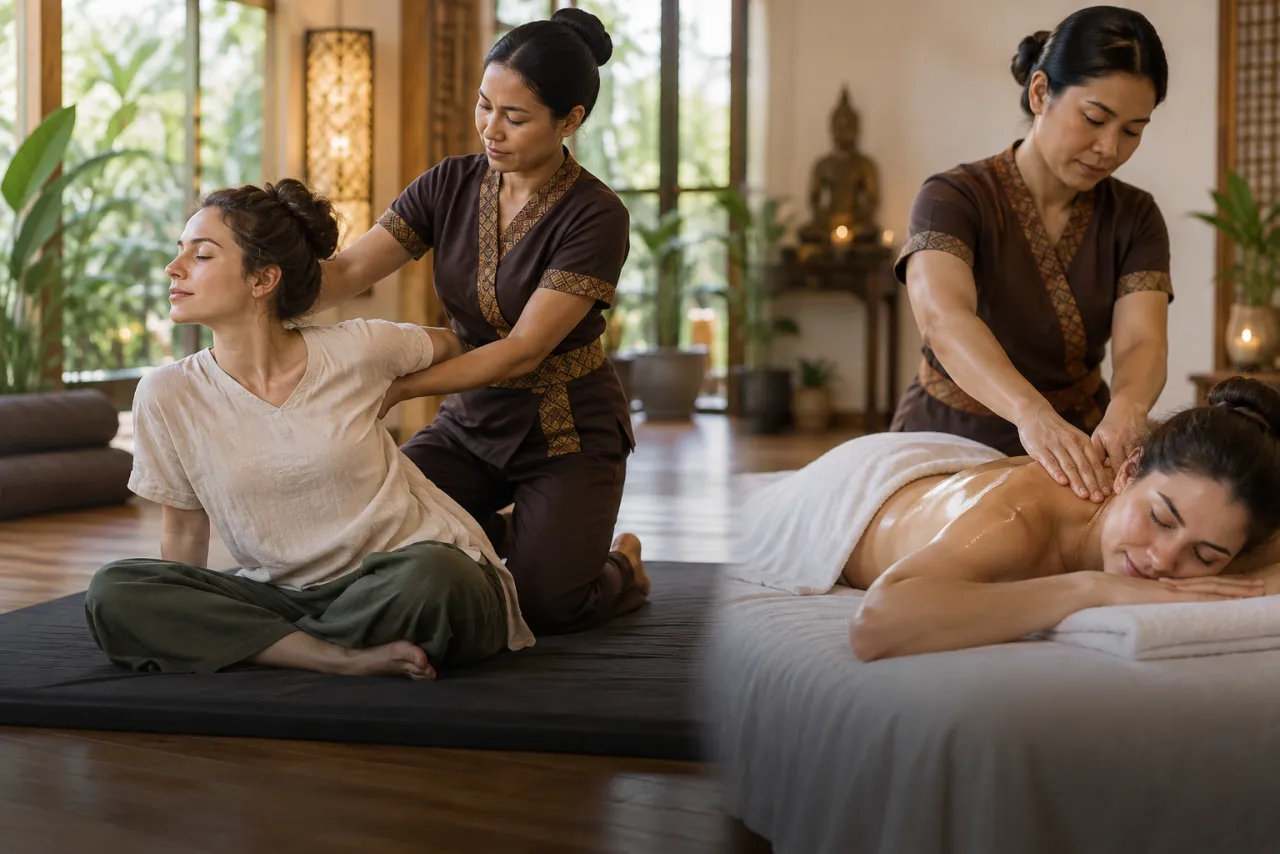
| Core technique | Point compression, stretching, mobilisation | Continuous gliding, kneading |
| Medium | No oil, client wears loose clothing | Essential oils, client draped |
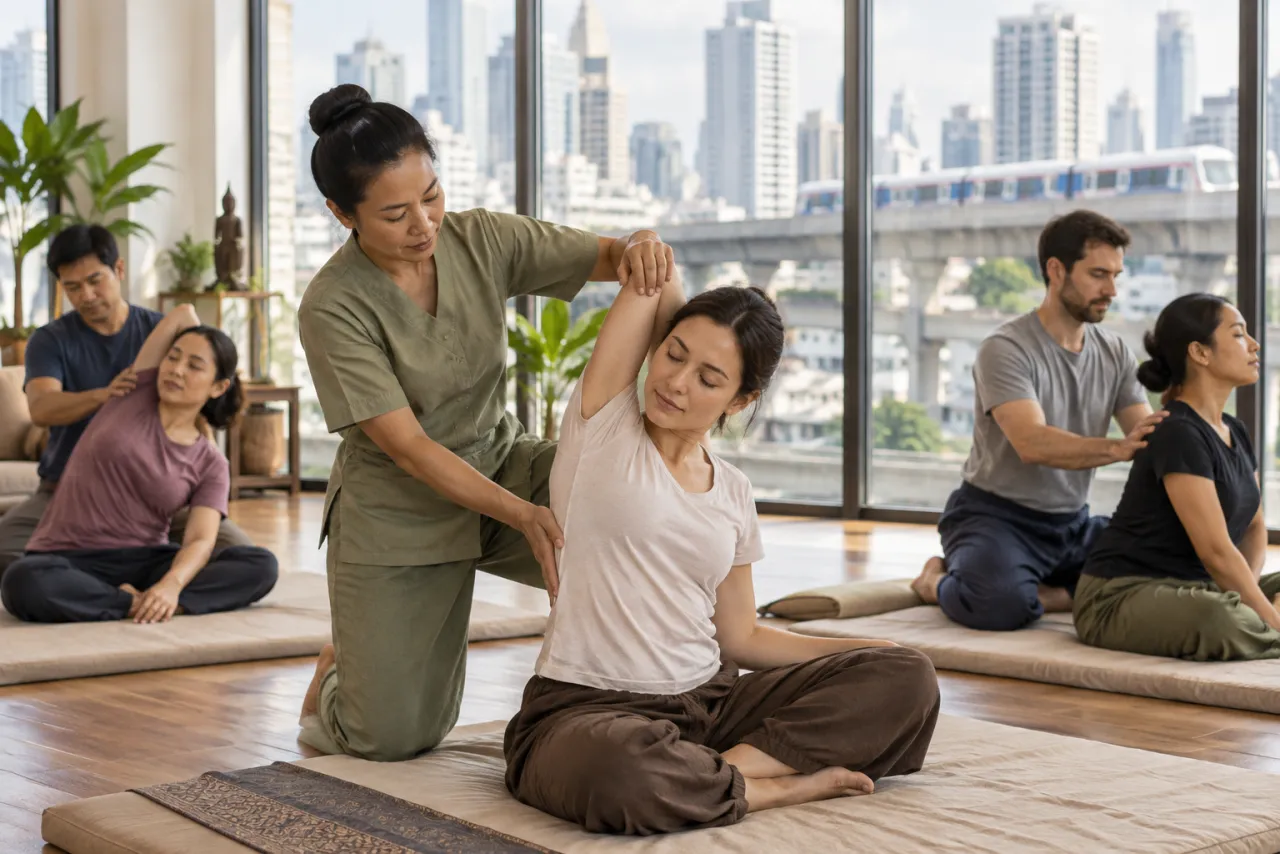
| Working position | On a mat, using knees and elbows | Standing beside a table, using palms |
| Strength | Deep pain relief, structural balance | Relaxation, lymphatic drainage, skin |
| Main market | Health massage shops, physio clinics | Hotel spas, resorts, cruise ships |
| Price per treatment | Moderate | 1.5–2× higher |
Choose Thai massage first if you...
- Want to be certain you can register as a practitioner
- Want to understand the body systematically before adding other techniques
- Prefer therapeutic work over pure relaxation
- Plan to work in a health massage shop, or open your own
- Also want a skill you can use on your own family
Thai massage is the foundation. Once you understand the sen lines and signal points, you understand why a muscle is tight and can treat the right place. That carries into every other technique.
Choose oil massage if you...
- Want to work in a 4–5 star hotel spa or on a cruise ship
- Want higher revenue per treatment and better tips
- Are drawn to the experience and atmosphere side of the work
- Already own a shop and want a premium menu item
- Plan to work abroad, since international spas are oil-based
Is one harder?
Thai massage is harder at the start. You must learn the lines, the points, and calibrate pressure precisely. Too light and the client feels nothing; too heavy and it hurts.
Oil massage is harder later. The hand movements are simple, but keeping the flow unbroken for ninety minutes without ever losing contact takes a great deal of repetition.
In practice most students take about the same time with either.
Why doing both is the real advantage
Say a shop takes ten bookings today: six Thai, four oil.
- A Thai-only therapist competes for six
- A therapist who does both can take all ten
This is why multi-skilled therapists are almost never idle, and why shops hire them first.
There is a second effect: the same client switches technique depending on how they feel. Sore back this week, stressed next week. If you can do both, that client stays yours.
The route we recommend
- Thai massage 150 hours — the foundation, and registration eligibility
- Work 6–12 months — steady your hands, learn real clients
- Oil massage 150 hours — move into higher-paying hotel spas
- Add a specialisation — facial, sports or herbal compress, depending on your market
If your budget allows from the start, taking the full package opens the widest market on day one.
Compare all courses, or read about therapist income before deciding.
Frequently asked questions
Do I need Thai massage before oil massage?
Which is more physically tiring?
Can I learn both at the same time?
Related courses
- Thai Massage for Health — 150 HoursTuition 4,900 THB
- Aromatherapy Oil Massage for Health — 150 HoursTuition 4,900 THB
Related searches
Serious about starting? Talk to us first.
Free LINE consultation