Facial Massage Course Thailand — Spa Career
Facial massage is one of the hardest positions for a spa to fill, and one of the easiest add-ons to learn. What the 60-hour course covers, who it suits, and the honest trade-offs before you book it.
Short answer
Facial massage is the menu item spas most often cannot staff, because almost everyone who trains in Thailand goes straight to body work. It bills at a higher rate per hour than a body treatment, uses far less physical effort, and the training is short — 60 hours, around 8 days, 24,700 THB at Michael Thai Massage School. It works best as a second skill alongside a body-work foundation rather than as your only qualification, unless you already have your own client base.
Ask a spa owner in Thailand which position is hardest to fill, and the answer is usually not a Thai massage therapist. There are plenty of those.
The answer is usually someone who can do faces.
Why the gap exists
The reason is not complicated. Almost nobody trains for it.
People who decide to learn massage in Thailand think of Thai massage first, oil massage second, and facial work as an extra — something you pick up later, if ever. So the demand side has shops that want the service on their menu, and the supply side has very few people who can deliver it.
That gap is where rates go up. It is one of the few places in this trade where being a beginner does not mean being at the back of the queue.
The money side people overlook
Facial treatments bill at a higher rate per hour than body work in most shops. That part is easy to see.
The part people miss is how little of you it takes.
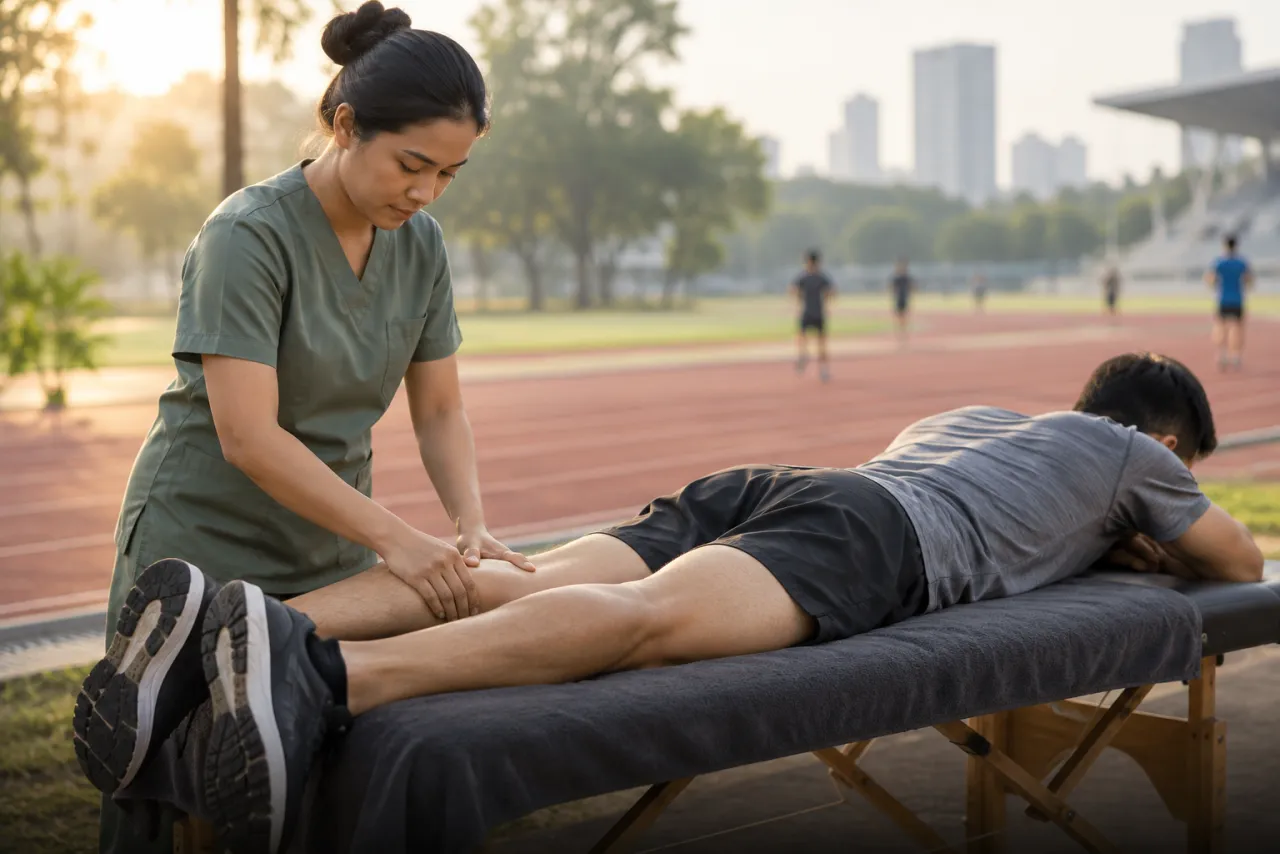
A two-hour Thai massage costs you your thumbs, elbows, knees and body weight. There is a hard ceiling on how many of those you can do in a day, and that ceiling drops as the years go by — we wrote about what this work actually does to a therapist's body in the aches therapists get and the postures that cause them.
Facial work is small muscles, fingertips, and a client lying still. More bookings per day, less wreckage, better rate per booking.
This is exactly why experienced therapists drift toward facial and foot work as they get older. It is not a retreat — it is how you keep earning at fifty without your hands giving out, which we covered in starting a massage career after 45.
What 60 hours actually covers
The course is built in four parts.
Facial anatomy. Which muscle sits where, how the nerves and lymph nodes are laid out, and what that means for direction and pressure. The face is unforgiving — mistakes show immediately and the client feels them straight away.
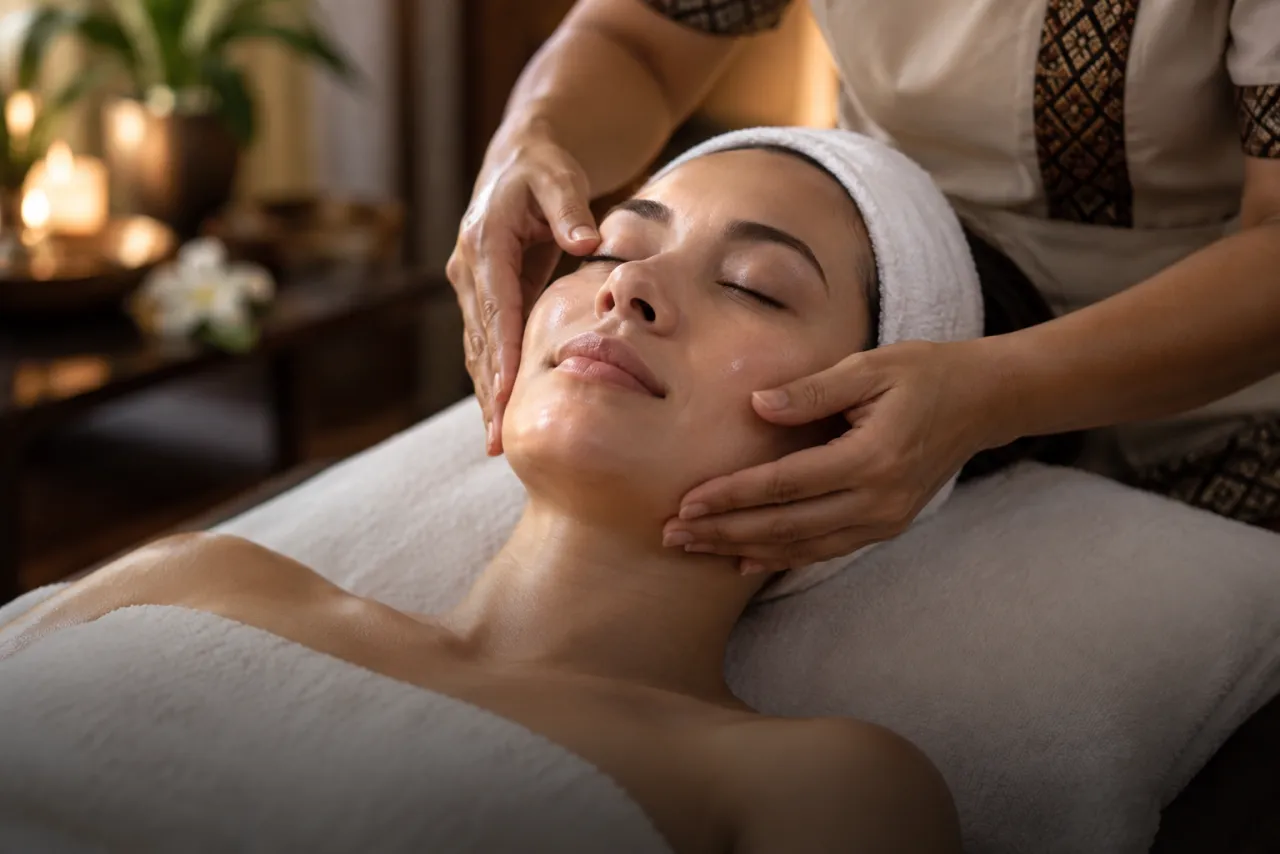
The full sequence. Cleansing, compress, circulation work, then release around the eyes, temples and jaw, in an order you can run without thinking about it.
Reading skin and knowing when to stop. Which skin you can work on, which you leave alone, how long to wait after a client has had a cosmetic procedure. This is the part that separates someone who trained from someone who copied a video. It is also the part that protects you, because the client who gets hurt is the one who ends your reputation in a small town.
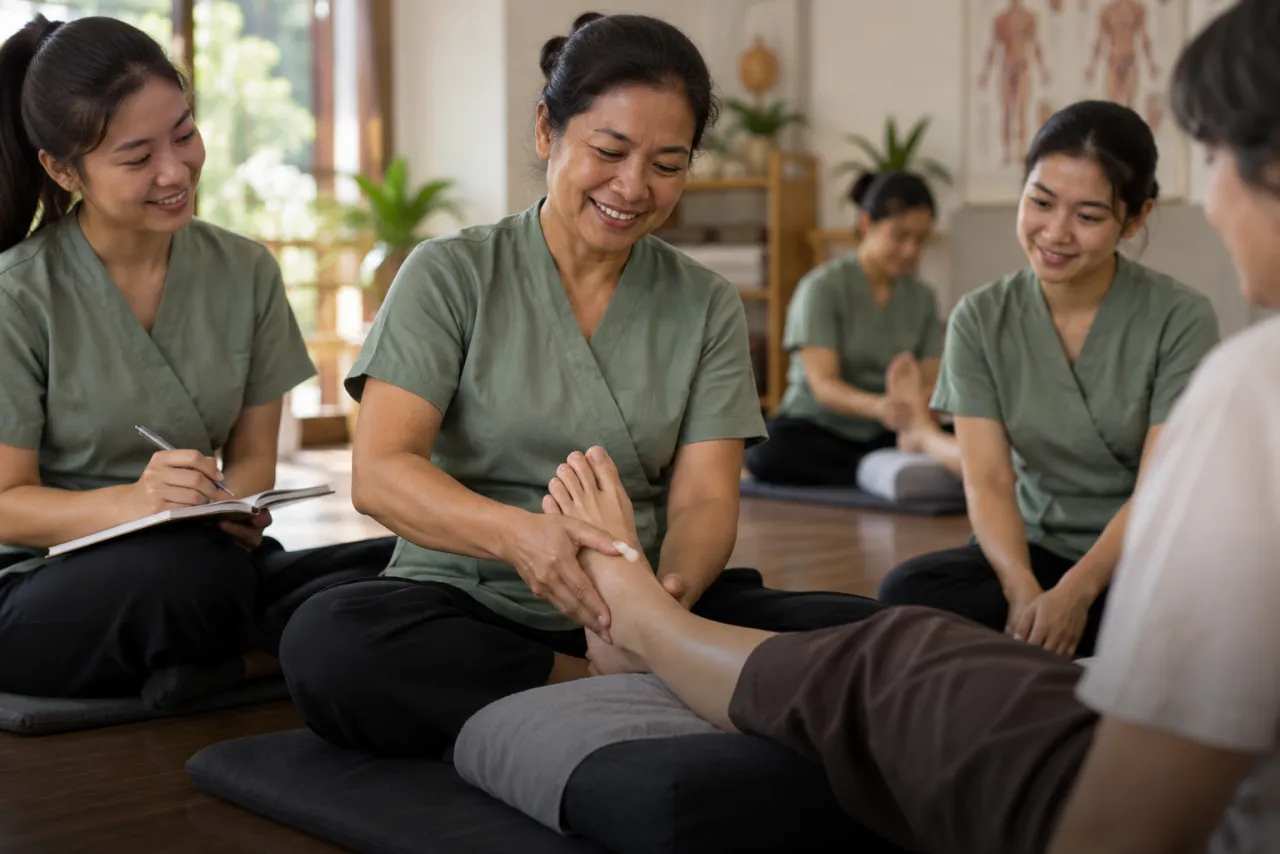
Practice on real people, then an exam. Repetition until the sequence is automatic, then a practical test.
Who this suits particularly well
Therapists who already do body work. Adding facial makes you the person a manager can slot into any gap in the day. Shops love staff who cover two menus, because rostering gets easy.
People planning their own small operation. Facial work needs very little space and almost no equipment, which makes it one of the cheapest services to launch.
Anyone whose body will not take heavy work. Old injury, small frame, bad back, or simply age. Facial massage asks almost nothing of your joints.
Men. Bluntly, hardly any men do this work, while a fair number of male clients would prefer a male therapist. Whoever moves into that first has it to themselves.
Which course to do first
If you want to be hired by a shop or spa, do the 150-hour Thai massage course first and add facial after. Hiring decisions are made on body work; facial is what gets you chosen ahead of the next candidate.
If you want to run your own service or already have clients, facial massage alone is a perfectly reasonable place to start.
If you are weighing up the whole cost of training in Thailand before you commit, what a massage course in Thailand really costs breaks down the numbers, and working as a massage therapist abroad is worth reading if the plan is to take the skill home.
Cost and timing
| Course length | 60 hours |
| Duration | about 8 days at 8 hours a day |
| Tuition | 24,700 THB (full price 37,700 THB) |
| Class days | Tuesday – Sunday, closed Mondays |
| Branches | Bangkok beside BTS Si La Salle, and Pattaya in Nong Prue |
Re-study is free for life. That matters more than it sounds for this course specifically — facial work is detailed, and a lot of people only discover which part they are weak on after a few months of real clients. Coming back for a day to fix it costs nothing.
The honest trade-offs
Two things worth saying before you book.
On its own, it is a narrow qualification. A shop that needs a body therapist will not hire you for faces alone. As a second skill it is excellent; as your only skill it limits where you can work.
It is precision work, not strength work. People who found body massage tiring sometimes assume facial will be easier in every sense. It is easier physically and harder in attention — you are working close to eyes, on skin that shows everything, with a client who can feel every inconsistency in your hands.
Summary
Facial massage sits in an unusual position: demand from shops exceeds the number of people who can do it, the training is eight days, the work pays better per hour than body treatments, and it is gentle enough on your hands to still be doing at sixty.
If you are not sure whether to start here or with the 150-hour foundation, message us and tell us what you are aiming at. We will tell you straight which one fits — including the cases where the answer is that you do not need this course yet.
Frequently asked questions
Do I need body-massage experience before learning facial massage?
How long does the course take?
Is facial massage easier on the body than Thai massage?
Can I use this training in my own country?
Does facial massage treat skin conditions?
Related courses
- Facial Massage for Health & Beauty — 60 HoursTuition 24,700 THB
- Thai Massage for Health — 150 HoursTuition 4,900 THB
Related searches
Serious about starting? Talk to us first.
Free LINE consultation